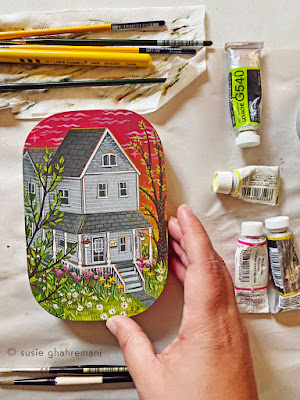
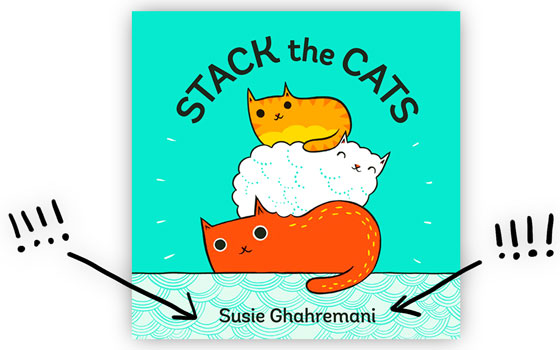
Showing posts with label susie ghahremani. Show all posts

Wednesday, November 2, 2022

Keeping the Creative Spark

We work on our picture books over long deadlines. Our portfolio pieces are rendered with attention to detail in every stroke or pixel. All of this can be a fatiguing and may lead to a little creative burnout.


A couple years ago, I read several creative books about how to maintain your spark — books like The Creative Habit by Twyla Tharp, The Artist’s Way by Julia Cameron, Catching the Big Fish by David Lynch, and Creative Quest by Questlove — all of which I loved. 


A consistent recommendation through all of these is to follow your curiosity and to have daily practices in place.


For me, my daily practices include writing in a journal, meditating, and drawing in a sketchbook. No matter how much work I have on my plate, I try to make space for these small things that keep ideas flowing, help with problem solving, and keep momentum going. A quick daily practice (that takes 10-20 minutes to complete) can add that sense of progression and accomplishment that sometimes lacks in our longer timelines.


I often use Patreon as a space to share these works in progress and creative practices, which helps me share my creativity and process in a way that feels safe and sustainable.


Here's a quick exercise I offered to Tara Lazar's Storystorm this past year to help spark your creativity using a timer: https://taralazar.com/2022/01/29/storystorm-2022-day-29/


Storystorm is itself a great creative practice to try out: quick, idea generating prompts for stories by Tara Lazar and friends (30 new prompts every January!) so check out those archives for some more ideas.


What creative books have you found inspiring? What are your daily creative practices?


- - - - - - - - - - - - - - - - - - - - - - - - - - - - - - - - - - - - - - - - - - - - - - - - - - - - - - - -

Susie Ghahremani (@boygirlparty) is the author and illustrator of picture books STACK THE CATS and BALANCE THE BIRDS. She is currently at work on MEMORY GARDEN, a collaboration with her mom, author Zoe Ghahremani inspired by their Iranian-American heritage.

She is also the illustrator of WHAT WILL GROW by Jennifer Ward, WHAT WILL HATCH by Jennifer Ward, LITTLE MUIR'S SONG by John Muir, SHE WANTED TO BE HAUNTED by Marcus Ewert, and LITTLE MUIR'S NIGHT by John Muir.

She paints with gouache, wanders in forests, listens to vinyl records, and snuggles her baby nieces. 

Find her at: Boygirlparty | Patreon | Etsy | Fb | Twitter | Instagram | TikTok

Tuesday, April 6, 2021

Accountability groups and time boxing to help find focus

When the pandemic hit last year, I struggled to focus as society and the world as we knew it changed before our eyes. I had deadlines to meet, and projects to finish, but I was perpetually distracted, sleeping badly, and anxious. And it makes sense -- nothing this past year has been normal and it's even less normal to push through it and work anyway

In those early weeks, all I could do was draw coloring pages for families stuck at home, posted to Instagram, as some small way to help someone out there who might be struggling, too:

I'm part of the community at You Belong Here, an arts and co-working space here in San Diego. Last March, when I presented my focus problem during our entrepreneur meetups (now happening virtually on Zoom), my friend Nic enthusiastically suggested: CAVE DAY! Cave Day runs 1 and 3 hour work sessions on Zoom (like a silent study hall) facilitated by trained guides who lead participants through stretches and refreshing periodic breaks.

This combination of accountability and time boxing -- has really helped me, and maybe something like this will help you if you're struggling with focus, too.

A painting by Susie Ghahremani, created during Cave Day virtual co-working sessions

Accountability to me means setting goals or making plans with others in the same position. 

At Cave Day, hundreds of people working from home join sessions daily, all hoping to move the needle on our projects or work. Our cameras are all on as we video conference in silence together. We are a community of people who want to improve our focus and to have better boundaries around our work. At this point, I typically participate in Cave Day 5 days a week, and have logged hundreds of sessions. They continue to be helpful to me.

Accountability can also look like joining a group like 12x12, Storystorm, entering your work in a SCBWI manuscript review or portfolio show, a 100 Day Project, or taking a class -- all of which meet a specific challenge with SMART goal criteria.

What are SMART goals? SMART is an acronym that stands for Specific, Measurable, Achievable, Relevant and Time-based.

For example, in the 12x12 challenge: it's writing / revising 12 picture book texts during the course of a year. For Storystorm, it's generating a picture book idea every day for 30 consecutive days, in January. Specific, measurable, achievable, relevant, and time-based -- with a community engaged in the same.

Time Boxing for me means dedicating a specific time to a specific task. By signing up for a 3 hour session on Cave Day, I can plan the work I want to do during that period of time. That has helped with the toxic feeling of Always Needing To Be Working. It also helps me set up an actionable plan around when I'll focus and what I'll accomplish. It also helps me to time box things like learning, revisions, working on new artwork, emailing, using social media, etc.

One hallmark of this past year is that time has felt basically meaningless when every day feels exactly the same, so time boxing helps with that feeling as well. Here's more info about time boxing.


It's hard to believe we're coming up on a year of pandemic life. During this time, folks here at KidLitArtists have continued illustrating, writing, creating, and releasing new books, while also tending to their kids and parents and friends and communities and mental/physical health. It's a lot! It was a lot even before the pandemic.

If you're not able to focus -- or you're feeling like you're just barely getting by -- you're not alone. Hope these tips help you, and please share your tips in the comments!

- - - - - - - - - - - - - - - - - - - - - - - - - - - - - - - - - - - - - - - - - - - - - - - - - - - - - - - -

Susie Ghahremani (@boygirlparty) is the author and illustrator of picture books STACK THE CATS and BALANCE THE BIRDS

She is also the illustrator of WHAT WILL GROW by Jennifer Ward, WHAT WILL HATCH by Jennifer Ward, LITTLE MUIR'S SONG by John Muir, SHE WANTED TO BE HAUNTED by Marcus Ewert, and LITTLE MUIR'S NIGHT by John Muir.

She paints with gouache, wanders in forests, listens to vinyl records, and snuggles her baby nieces.

Find her at: Boygirlparty | Patreon | Etsy | Fb | Twitter | Instagram | TikTok

Monday, December 7, 2020

Things that are keeping me sane during the pandemic (aka cute and useful things from Susie Ghahremani)

I wanted to do a quick post to highlight a few things made by our very own Susie Ghahremani (available from her shop, boygirlparty.com) that have been really helpful during the past 8 months.

Growth: A Journal to Welcome Personal Change

I know that during the past 8 months, I've developed a lot of bad habits. This journal is full of prompts to spur your change, allow you to reflect, and celebrate your progress. Perfect for starting a new year and keeping you motivated while making improvements in your life!

If you want to see more images of some of the interior pages, check it out here.


Send Some Mail!


I was looking around for some cute cards and wanted to support an independent artist, when I remembered Susie's shop. I've sent more snail mail this year than I've probably sent in the past 10 years. Now that my son and I can't see his grandparents in person, we have been writing them cards to keep in touch. Plus, it's always fun to get mail! 

Susie has a variety of cards available here: https://shop.boygirlparty.com/collections/all/card


Get Organized!


And finally, this weekly organizer is helping me keep my life and my kid's homework assignments organized. Not only has the passage of time seemed very confusing lately, keeping on top of online school assignments has been a huge challenge. Using this organizer has been massively helpful to see everything that is due at a glance. 

Susie also has a variety of to-do lists and some other organizer designs to keep everyone on track, available here: https://shop.boygirlparty.com/collections/all/organizer


Tuesday, April 30, 2019

Celebrating Indie Bookstore Day!

Independent Bookstore Day was celebrated nationally this past weekend. It's a wonderful event that rewards book lovers with exclusives and events at all their favorite local shops. I love participating as a shopper, supporting the small businesses that make our neighborhoods special -- all while filling up our shelves with new books to enjoy.

But, it's also a great opportunity to participate as an illustrator and to give back to our communities!
Indie Bookstore Day takes place on the last Saturday in April!
Personally, I'm passionate about small businesses, so I got involved years ago with my local Bookstore Day by signing my books or presenting my artwork during the event. Many families celebrate Independent Bookstore Day, so it's an opportunity to read aloud, draw with kids, or talk to families about the path to publication and how picture books are made. Even just to answer questions. You never know who you might meet and inspire!

Photo credit: Dain Middleton
But this year, I was named Book Crawl Ambassador for my city-wide Independent Bookstore Day Celebration. (They even made me a sash!)

I designed giveaways for every bookstore participating, and also hid prizes around the independent shops just for fun. I ran from shop to shop for ten hours of signings and events!

It was worth it to see the smiles and to meet the wonderful book lovers of my community.


It's been a lot of fun, a great way to give back to my community. Indie bookshops are run with a lot of heart and give us recommendations and conversations a website never could. 

These book stores celebrated my debut as an author and every book I've published, know every member of my family, carry my products in their stores, and have laughed and cried talking about books and life with me! I love them, and the people who run them, and they deserve to be celebrated -- as do the people who shop at them!


Here are more images from the San Diego Book Crawl / Independent Bookstore Day 2019! (#SDBookCrawl was our hashtag -- check out those book lovers in action!)

People of all ages attended -- some riding public transportation or bikes to every stop! One of the best parts of being out and about during our Indie Bookstore celebration was hearing everyone's stories -- where their home bookstore is, where they've discovered, and how they're crawling between stops. All in all, it reminded me of the power and kindness of the book loving community - and I'm glad I volunteered my time to this!


Thank you to my community and all the wonderful booksellers in San Diego who made this event a total blast. I don't know about you, but I'm already excited for next year's!

- - - - - - - - - - - - - - - - - - - - - - - - - - - - - - - - - - - - - - - - - - - - - - - - - - - - - - - -

Susie Ghahremani is the author and illustrator of BALANCE THE BIRDS and STACK THE CATS
She is also the illustrator of WHAT WILL GROW, WHAT WILL HATCH, and forthcoming LITTLE MUIR'S SONG written by John Muir (Coming August 13th, 2019)
She paints in gouache, drinks a lot of coffee, and is -- believe it or not -- an introvert.
Find her at: Boygirlparty | Patreon | Etsy | Fb | Twitter | Instagram

Wednesday, October 24, 2018

Our Art Thrives with Hope

I'm experiencing something I couldn't have imagined a few years ago: I'm a full time picture book author and illustrator now! There is officially no part of my year when I'm not making books! And as I celebrate/promote/fret about the release of my new book while I work on the next, I came to a realization:

From my new book, BALANCE THE BIRDS by Susie Ghahremani

For me, promoting a new book is an anxiety-filled endeavor. I worry it won't find its way onto library and store bookshelves. I worry it won't resonate with readers. I worry it will be forgotten or go out of print. And, quite often, I have to step outside of my comfort zone to do in-person events like book signings and talks. I have to promote and market and share which feels like the antithesis of why I got into art. And all of it opens me up to very public, very permanent criticism.

But making art comes from the exact opposite mindset: I think about the audience -- little readers -- almost to the exclusion of everything else. I try to make something that will resonate with them. I want to make something timeless and lasting. I work in comfortable solitude doing what I love best -- being creative. No one is judging my process or skewering me for it, and I feel totally free.

This same spread, back when I quietly painted it in pieces on translucent vellum.

Today, when writing about my complicated experience promoting a book while working on the next, I had a revelation: Making a book -- whether it's creating the first "draft" of a manuscript, putting pencil to paper to sketch, or painting the last detail on the final art -- it all thrives when we come from a mindset of hope and optimism. But, immersed in the anxieties of a book launch, your hope and optimism fades when you need it most.


This has all made me think about how important it is as creators to protect our mental health and to try to create joy in the less comfortable days after publication so we can get back to our studios with that great mindset. Here are some of the things I've been doing to reset my hope and optimism in-between the tense high wire act of a book launch:

Signing my books with drawings! Fun for me and you.

1. Plan to have fun -- CREATE fun -- at your book launch events!

Yes, you might be out of your comfort zone -- but drawing in every book I sign brings my favorite activity into something that might otherwise be stressful. Making a face cut out made for hilarious and adorable photos that allowed my art to come alive with the interaction of visitors.


2. Don't stop making art during stressful times!

Even though a book launch is a demand on your schedule and time, and you might have other deadlines to meet for your next book, try to create space to make art just for fun. Not for your book launch, and not for your next book, but just optimistic, hopeful art just for fun. Maybe take a class! Maybe doodle in your sketchbook. Maybe post for #Inktober. It will energize you in all kinds of ways and reset all that book launch anxiety.

Making ceramics - totally unrelated to my work on books - has helped me during stressful times! Shoutout to my ceramics studio, a 501(c)3 non-profit called Clay Associates, and my marvelous teacher Eric Woods who is always bringing me back down to earth.
3. Live your life.

There will always be more you can do as an artist and author -- a new portfolio piece, a new proposal, a new manuscript, edits, outreach, education. There will always be something you have to do: a deadline, an event, an interview. A blog post (like this)! Try to protect time in your schedule to just be a person. Cook a meal from scratch, read a book, call a faraway friend, travel and go for a nature walk to see what you might discover.

Those simple interactions are filled with hope. These events strung together make a lovely life. The hopeful acts of making art and launching it into the world again and again can make a lovely life, too. Keep optimism on your side if you can.

Hiking in Japan with my husband! Living life, immediately after delivering the final art for Balance the Birds.

4. Get back to work!

These books aren't going to make themselves!


What are your favorite ways to get back to a hopeful mentality where creativity thrives?

- - - - - - - - - - - - - - - - - - - - - - - - - - - - - - - - - - - - - - - - - - - - - - - - - - - - - - - -

Susie Ghahremani is the author and illustrator of BALANCE THE BIRDS and STACK THE CATS. She paints in gouache, drinks a lot of coffee, and is always looking for great reasons to feel hopeful. One hope she has is that you are registered to vote in this upcoming election.

Susie is represented by Stefanie von Borstel of Full Circle Literary. Find her at:

Friday, August 18, 2017

What can you do if your artwork is copied?

Several friends have asked me to blog about copyright issues I experience, so here goes. Copyright is a subject I write / talk a lot about, because protecting my artwork has become a big part of my life.

What can you do if your artwork is stolen, copied, or misused?

Answer: Dust yourself off, educate yourself, and get ready to fight for your art.

Like it or not, get ready to defend your art if you have to.

As an independent artist, I also develop a collection of products -- and between both that and my publishing projects and books, I've seen my artwork reproduced and misused. A lot. Sometimes I see it for sale as an unauthorized copy online. Sometimes I see it in a store in the mall. Being copied sucks, but I fight it and stand up for myself, and hope if you're in this situation, you will do the same.

At this point, every day of the year, I fight copies of my work at the hands of corporations and companies that use my artwork without permission and profit off it. I file hundreds of takedown notices, I register my copyrights, and I do it all myself -- and you can, too.

If you've been ripped off -- by a company or even another artist who plagiarized your work -- I am so sorry. It's a horrible feeling. Here's what you can do:

1. Be vigilant. Keep an eye out for copies of your work. Do reverse image searches of your art. Let artists know if you see copies of theirs. Ask your community to keep an eye out for you. Let them know you're ready to fight if you see a copy! Don't be complacent! And as a consumer, don't assume you're buying from the original artist just because it's on Amazon, Instagram, or Etsy (Look for the artist's copyright info!)

Seek authenticity! Look for the copyright info! And, make sure you copyright credit your own images and products.

2. If you've been copied, fight for your art. Lawyer up or file a DMCA takedown notice if you see exact copies of your artwork online or in stores. There is more information about how to do this in my links below, but it's something anyone can do (lots is possible without a lawyer's help!) I do not recommend communicating with a person or company that copied you without a lawyer's assistance.

This is basically what a DMCA notice looks like. You can find templates online.
But do not misuse this program! This form is for exact copies only, not for copies of general ideas.
3. Be an example for other artists, and a steward for your work. Register your copyrights with the US gov when possible. At $35 per registration, the costs can add up (I spent over $1000 on copyright registrations this week alone!), but your work is protected by different terms in federal courts when formally registered. Make sure your publishers register your copyrights. Do not do Work for Hire if you plan to retain ownership of your work.

All of my publishers copyright register my projects. They got ripped.
Having a formal copyright registration for each gave me a better position in a major lawsuit. Photo by Renée Chartier.

4. Help educate others. Educate the public, educate your peers. Be a positive example for your peers on how to stand up for yourself. Read about orphan works legislation that could negatively affect illustrators and advocate for artists. Support original art. Copying doesn't just hurt the artists who are stolen from -- and it does really traumatize and make an artist fearful of creating and sharing -- it also hurts the creative community by robbing it of distinctive voices and the ability to control quality and monetize one's creative work.

5. Support the artists you love who create original work. I've been a full time artist for 15 years now, and I don't know where I would be without the support of friends and fans through this harrowing aspect of being a professional artist. Sometimes fighting relentless copying kills my spirit and makes everything feel pointless. Support is important.

Support the artists you love, and encourage them. Help them afford their copyright registrations, help them fight against copies. Debbie's post about creative ways to support a kid lit illustrator / author is great!

Getting these gorgeous flowers in sympathy from my friends after I experienced a major infringement was an incredibly kind and supportive gesture that helped during a difficult time.

I've written extensively about the issue of art and copyright before, so here are a couple links to those posts for further reading:


I hope this helps, and I hope you never find out what this feels like.

But if you have a question, please feel free to leave a comment on this post and I'll respond when I can.

I am not a lawyer, but I know a lot about copyright because of my unfortunate experiences being copied. I will never stop fighting for my art! Please join me.


familiarize yourself with the work of artists you love so you can tell them if you see copies. 
A post shared by susie ghahremani/ boygirlparty (@boygirlparty) on


Susie Ghahremani is an award-winning illustrator and an advocate for artists.
Her author-illustrator debut titled STACK THE CATS was just named one of Amazon's Best Books of the Year (so far) for 2017!

For more about Susie and her books and art and her never-ending fight against copies, visit her site at boygirlparty.com or follow at @boygirlparty on instagramtwitter, or Facebook for the latest updates.

Wednesday, June 28, 2017

Portfolio Showcase Advice from Jennifer Laughran of Andrea Brown Literary

As any reader of KidLitArtists knows, one of the most thrilling parts of attending SCBWI conferences as an illustrator is an opportunity to show your work alongside your peers at the Portfolio Showcase. Find the guidelines for submission here.

In addition to the satisfaction of putting your hard work together and sharing it with the world, the showcase also presents opportunities to win awards and scholarships — for all levels of experience, from student to seasoned professional.

FYI, all the artists and authors blogging at KidLitArtists are former mentorship winners from the SCBWI portfolio show. I really can’t speak highly enough about this opportunity and community!

A portfolio mentorship entails the opportunity to get detailed, focused feedback from the conference Illustration Faculty during the conference. Consider more than just the technical specifications when you enter your portfolio in this show; each judge and visitor comes to the portfolio show with her own sense of what she is looking for.

To find out a bit more, I interviewed Jennifer Laughran of Andrea Brown Literary about what an agent attending the conference might be looking for, and for her feedback and advice for illustrators entering this show:

Jennifer Laughran of Andrea Brown Literary

Susie: Please tell us a little bit about yourself.

Jennifer: I'm a senior agent at Andrea Brown Literary Agency. I rep authors and author-illustrators for books from PB through YA. 

Susie: How much of your roster is made up of illustrators (as opposed to authors, and author-illustrators)? If you’re primarily interested in author-illustrators, do you want to see a book dummy?

Jennifer: My own list is primarily authors - I do rep about 15 author-illustrators. I'd be open to somebody who was "just" an illustrator, but might have goals to be an author as well. As an agency we rep about 100 illustrators - you can see our roster here

If you are querying an author-illustrator piece, I'd want to see the text, a sketch dummy, and a couple of finishes. 

Susie: When browsing the portfolio show, what are some of the key things you look for (as an agent, or as a judge)?

Jennifer: I like a strong sense of MOVEMENT in illustration - dynamic pictures, rather than static. I like a picture that really tells a story, rather than just being a beautiful image or decoration. The thing is - lots of people are good at design and good at drawing, and might make swell editorial artists, or be great at surface design, textiles, cards, etc... but that DOESN'T automatically mean that they will be awesome at children's book illustration. 


Photo by Debbie Ridpath Ohi from this phenomenal, must-read post!

Susie: What’s something you recommend for the portfolio that illustrators might not think of doing?

Jennifer: It can be very helpful to see a couple of page turns. If you aren't an author, consider doing a couple of spreads from a well-known fairy or folk tale in your own way. 

Don't forget - illustration isn't JUST for picture books! It can be fun to see how an artist might approach book jackets and/or b+w interior spot art. If these are things that appeal to you, you might find your own way to interpret a "classic" book jacket or iconic literary scene. 

Susie: What are common portfolio or book dummy missteps you recommend illustrators avoid?

Jennifer: I think sometimes illustrators put in everything and the kitchen sink just so the portfolio is "big" but some pieces are obviously of lesser quality, or in a more amateur style, etc. I'd rather have fewer pieces of higher quality, than a portfolio bursting with filler. 

Susie: What subjects would you like to see appear more in portfolio pieces?

Jennifer: For illustrators doing humans, I'd like to see diversity. 

Susie: As an agent, what do you look for in a takeaway promo piece?

Jennifer: I look for pretty art and contact information. And if you are already agented PLEASE put your agent info on there, too. 

Susie: Any other general SCBWI conference advice?

Jennifer: Have fun. Stay sober. Drink lots of water. 

Susie: Thank you, Jennifer! Good luck to all the illustrators working hard to be part of this amazing show!

Grand Prize winner at #LA16SCBWI, Oge Mora, a student of the Rhode Island School of Design

For more about #LA17SCBWI, check out the official SCBWI blog. For more portfolio advice, read: Portfolio Tips From SCBWI Mentorship Winners.

Registration is still open - get all the details on the 2017 SCBWI Summer Conference, July 7-10, here.

This post was cross-posted to the official SCBWI Team Blog.


Susie Ghahremani is an award-winning illustrator and obviously also a major design nerd.
Her author-illustrator debut titled STACK THE CATS was just named one of Amazon's Best Books of the Year (so far) for 2017!

For more about Susie and her books and art, visit her site at boygirlparty.com or follow at @boygirlparty on instagram, twitter, or Facebook for the latest updates.

Monday, May 1, 2017

COLOR, the printing process, and Stack the Cats!

I think a lot about color.

As an illustrator: selecting color is an important consideration in the emotional and graphic effect your work is going to have. But it's also an important consideration from a technical perspective of where your work will appear -- whether you're sharing your artwork on screen on your website or blog, or in print in a book or portfolio.

When setting up your artwork for reproduction, generally CMYK is for printed material (CMYK = Cyan, Magenta, Yellow, and blacK... no idea why they didn't just make it CMYB) and RGB is for art that will appear on screens.

On printed material, white appears only as the absence of color. Your page is white when there is no ink on it. C, M, Y, and K layer to produce the effect of many colors on top of a white surface. (additive color)


But on a screen, you need all the colors on to light it up to white. Your screen is black when there is no red, green, or blue illuminating it. (adding color to make it white = subtractive) You can run a damp cloth across your computer screen to see a demonstration of how much color actually goes into making white appear on screen!


While you can create a spectrum of colors with CMYK, it's not the same spectrum as RGB. Many images, especially those created digitally (i.e. with a digital camera or drawing native to the computer as with a Wacom tablet or iPad), render in RGB colors, so the colors or vibrancy of the image will change on the printout because the two color spaces have different ranges.

RGB vs CMYK


PRO TIP: there's a function in the color picker in Photoshop that can show you the closest CMYK tone to an RGB color. Using this will help you minimize and plan for the shifts that occur in printing.

Use the Color Picker in Photoshop to find the closest CMYK tone

Mastery of RGB might be great if you're creating an e-book or a digital teacher's guide to accompany your book, or optimizing your images to share on your website. So, just because your work may be created to print in CMYK, don't think you can't forget about adjusting your images for RGB as well! 

Your website and your books will have a polish to them if you can think about how color space and printing can help your artwork.


When digital artists are creating a printed portfolio of their work, it may be worth the investment to have your images printed as giclée prints -- a type of professionally produced, high quality inkjet print that uses LOTS of ink colors, not just CMYK, to more accurately reproduce what you see on screen:


For accuracy of printed color, you can also create artwork reliant on the Pantone Color Matching System (PMS). The Pantone books are expensive, usually a couple hundred dollars, but are essential for any kind of printed design that uses distinct color separations (i.e. silkscreening as is done with t-shirts, or letterpress) 

Pantone is not used for screen based artwork because screens are not a consistent medium, and screens are RGB by default. Usually for on screen color matching, people use the bin hex system at a coding level (it usually looks something like "#6de52a" -- you'll see a section for this in Color Picker in Photoshop as well) 

Many corporations have a signature Pantone color for their logo, which is why Tiffany Blue appears as the exact same color wherever you see it. 

The Pantone guide is a series of color swatches similar to paint store samples, and each is assigned a number and a corresponding formula that any printer can use to replicate that exact color without noticeable variation. 


This is what a Pantone color book looks like
Susie Ghahremani at her computer
Here's a photo my friend Suzanne Strong took of me assigning Pantone swatches to some art to be silkscreened.
One way Pantone colors might come up in your Kid Lit artwork:  On several of my picture books, my publisher asked me to assign a coordinating Pantone color for the text and printed it as a fifth color over the CMYK artwork

My artwork was painted on wood, so those files were created for CMYK printing. But by assigning a 5th color on top of the CMYK -- a Pantone color -- we could print the text in a complementary way to the artwork (it's printed here in a brown tone, harmonizing with the warmth of the artwork rather than a heavy black!) All of my digital files of my hand lettered text were purely black and white, but they appear brown in the books due to the printing process.

This is also a practical choice: the books can be altered for foreign translations without making changes to the CMYK artwork. Same CMYK art, new 5th Pantone layer for the text.

What Will Hatch? picture book in English and Korean

This brings me to an exciting moment in this already-too-long post:

Tomorrow I'll be celebrating the release of my author debut, Stack the Cats

And I created this book entirely using Pantone color separations!

My wonderful publisher Abrams Appleseed was very supportive of this frankly insane decision. 

I wanted the artwork to have a high energy, graphic appearance to it similar to silkscreened artwork but with the softness of painted lines, so I made a choice about the printing process to complete the effect, and created all the artwork specifically for this production process.

Stack the Cats by Susie Ghahremani comes out on May 2nd!

Aside from the normal challenges of developing my manuscript and book dummy (dummies, let's be honest. There were a LOT of versions!), creating the final artwork for Stack the Cats meant:

  1. Painting every spread in gouache on paper
  2. Scanning and importing the paintings to my computer
  3. Setting them up in Photoshop as 4 color files with corresponding Pantone channels (not CMYK or RGB!)
  4. Separating and coloring my artwork so each color is its own piece of artwork! It took four separate images layered to create a single final image -- see below!
  5. Creating overlap on every tiny line where colors meet so if the printing alignment was off, the artwork would still print faithfully (also known as trapping. This was an incredibly technical and particularly annoying aspect of the art making)
  6. Doing a million test prints with my publisher to ensure this ambitious experiment was going to come out the way we hoped
  7. Refining, refining, refining.
Color separated artwork for Stack the Cats by Susie Ghahremani

This digital file looks pretty different from the colors of my final art because I worked with Pantone colors, not those pesky RGB colors that appear on screen. So even through many stages of printed proofs, it was never really known exactly how the final artwork would look because the Pantone colors layer in ways our computers can't accurately depict.

But I'm so pleased with the vibrant, tactile result! It's exactly what I was going for. And that black cat with his tongue out? Since it's the result of layered Pantones, he's a richer tone than I'd ever be able to achieve with CMYK!

Stack the Cats by Susie Ghahremani


Making color separations out of my painted art was a serious technical challenge, but it's one our illustration predecessors were bound to! In a time before computers, materials such as meticulously trimmed rubylith film were used to assign bold colors under hand-drawn lines. Artists like Dr. Seuss were known for their signature, limited use of color, but it may have been a limitation of the printing process itself that he used to his advantage!

Take a look at your kid's book collection. How do you see artists using the printing process to make their books have greater emotional impact?


Susie Ghahremani is an award-winning illustrator and obviously also a major design nerd.
Her author-illustrator debut titled STACK THE CATS releases TOMORROW!

Come celebrate with her at an upcoming book event! Visit her site at boygirlparty.com or follow Susie at @boygirlparty on instagram or Facebook for the latest updates.

She'll be at the SCBWI summer conference! Will you?