Showing posts with label writing. Show all posts

Tuesday, February 26, 2019

How Note-taking Helps Me As a Creative


I have a thing with taking notes.

As a big non-fiction fan who geeks history and science, I jot down every interesting details. Stacks of notebooks pile up over the years.

I enjoy making my own history timelines. Which Chinese emperor was on the throne when Queen Victoria reigned? What was going on in England when Michelangelo painted the Sistine Chapel? It's fascinating to piece together my own jigsaw puzzle.

A Notebook from Year 1000 to 2000.

Sometimes I pick a very specific timeline to research.

A notebook about the US Founding Fathers.

And I get intrigued and try to make stories out of them.

Comic samples and sketches.

The truth is, I couldn't find the right story within them most of the time. I'd tell myself: It hasn't worked...yet. But it will come. One day.

It means knowing A LOT of trivial facts – which makes for great conversation starters.

It means watching movies and go: Why did they store the Robonaut in the Kibo module? Isn't that suppose to be in the US Lab?

Sketch-notes on the International Space Station.

It means knowing which picture books depict which time eras. Maybe one day it can come in handy at a school visit. Who knows?

Learning history through picture books & graphic novels.

It means creating images for fun from my timelines – because it feels right.

Illustrations on the modern history of information and communication.

And sometimes, in those very very lucky times, a publisher has a project that matches up precisely with my deep passion, and that's when I know I'm ready for it.

"Frenemies in the Family", written by the brilliant Kathleen Krull, illustrated by Maple Lam,
published by Crown.

Interior pages of "Frenemies in the Family".

In the end, you just have to trust that all the dots will connect one day. And honestly, even if the dots don't connect, the journey of learning and creating is rewarding in and of itself.

-------


Maple Lam wrote and illustrated MY LITTLE SISTER AND ME and WHERE IS THE TREASURE? She illustrated FRENEMIES IN THE FAMILY by Kathleen Krull, WHAT CAN YOU DO WITH A TOOLBOX? by Anthony Carrino and John Colaneri, and TWO GIRLS WANT A PUPPY by Ryan and Evie Cordell.

More about Maple at her website, Facebook, Twitter, and Instagram.

Tuesday, April 17, 2018

I'm An Illustrator But...


. . . another illustrator is illustrating my book. Although I never imagined this would happen to me, it turns out to be a common occurrence in children’s publishing. 

Since my last contribution on the Kidlit Artist blog, I’ve been painting, drawing and exploring fun and different styles of illustration. I’ve also devoted more time to writing and discovered that I enjoy creating lyrical and poetic stories.  It turns out that humor tends to come out in my writing — more so than in my art, which turned out to be a  challenge with my funny, new story.   This post is about how I came to embrace the idea of another artist illustrating my humorous story.

Here’s what happened.

At an SCBWI writers’ retreat in Iowa, I Am Goose!, caught the attention of editor and agent Laura Biagi, who offered representation. After many revisions, back and forth with Laura, tweaking the nuances of the story, finding the style of the art, she submitted it to several publishers.

Soon after, Laura called to let me know that we had two offers for my story. I was elated! But, that excitement quickly turned to disappointment as I learned neither publisher thought the illustration style worked with the story. 

Needless to say, it was a bitter pill to swallow. I have always perceived myself as an illustrator first and writer second. Not to mention, I had been working on for this book for quite a long time. In fact, I created a story bible for this manuscript. Here is a link to a previous post: http://kidlitartists.blogspot.com/2015/05/character-bibles-discover-your-story.html

At this point I was still determined to illustrate the story. I thought if I knew exactly what the editor and art director wanted, that I could do it. They agreed to give me another shot at finding the right style. They described the style that they felt would enhance the manuscript. I got to work. I came up with a completely different look — more modern and stylized. When I sent it to my agent, I told her, “That’s all I’ve got. If this isn’t right, then I will step aside and let another artist envision my characters.”

A few days later while I was walking on the prairie, Laura called. It still wasn’t right. At that point, I felt a sense of relief. Possibly the fresh air or birds singing helped me to feel at peace with this decision. I had worked on this story for so long, and I needed to move on. Thank goodness I had many other manuscripts and dummy books waiting for me to finish. 

Laura suggested I continue writing humorous stories, with an understanding that other artists would be a better fit, while also writing lyrical stories that fit my own style of art. After this long walk and talk with Laura, I knew this was the right decision for me and my manuscript. 

I was thrilled when the editor, Dinah Stevenson at Clarion chose the talented Vanya Nastanlieva to illustrate “our” story. I came to see that the book no longer belonged to me, but to each person who had a role in its publication.  

I Am Goose! will be released in 2019. I can’t wait to see the illustrations and read it to the Head Start children who inspired this story. 

I hope this post will help illustrators who might be in this situation some day. 

Happy writing and illustrating,

~Dorothia

-------------------

Dorothia Rohner enjoys illustrating and writing stories for children
 that combine nature, humor and the magic of imagination.

Author: I Am Goose! (Clarion, 2019)
Twitter: @dorothiar
Instagram: @dorothiar

Debut Authors 2019:
https://newin19.weebly.com/about-us.html

Monday, August 15, 2016

Observing + Understanding + Respecting your Process


This August was my third SCBWI national conference in a row. Part of my planning for it involved making a new dummy, and I had about 4 months to pull it together.

The problem was that I decided I wanted to make a new dummy before I had a solid, workable story. So there was a cart. And it was in front of a horse. And I did a lot of thumbnails, sketches, and freaking out before I realized that I was not doing so well with that need-to-have-a-new-dummy cart standing in front of a story-that-isn’t-working horse.

This isn’t the first time I’ve done this. I’m great at rapidly generating a ton of ideas for stories and scenarios, and I’m not great at testing them to see if the story itself makes sense or feels cohesive. After a month, I had drawn out an entire 32-page dummy before I got the confirmation from a critique group: the story was just not working. I was very frustrated, and I wanted to drop the story entirely. But where had I gone wrong?


Instead of going back to the dummy for edits, I wanted to go further back, to the root of where I was working from. I wanted to look at my process. I wondered what would happen if I were to observe it, without trying to make any solutions or justifications. What would I find?

I came up with this process of self-reflection that I thought might be helpful to other kidlit people when doing long-term visioning and improving their creative practice. The process has four steps:

Step 1: Get it All Out 

I took out a sketchbook and wrote about how I work, and the “things” I was experiencing. It was important at this time to not self-censor (“that’s not relevant”) or try to immediately develop solutions (“what if I try x?”). I kept in the personal stuff (“I want to exercise more” and “call mom more”), because with creative work, personal and professional often bleed together.

This step in the process is all about unloading. You need to know what you are working with before you can start to work and understand it.

Step 2: Look for Patterns, and Identify Problems 

At this point I want to see everything at once and start to identify categories, themes, and patterns in the way that I work. Do I just sit at my drafting table and hope for the best? Am I working on a knife’s edge (deadline to send postcards, portfolio, etc. to the printer) so that even getting a flat tire on my bike would throw my entire schedule off?

Based on this writing, what large problems or issues are surfacing? Can you write them down? What gets lumped together? What needs to be teased apart?

Some other things you’re going to want to ask yourself: what are the implications of the way that I’m working? How are my patterns influencing my outputs, my relationships, my career, and my future goals?

You might also think about whether or not these behaviors, in context, are inherently “bad” or unproductive. I’ve noticed that there’s a trend and reward for artists with massive output, usually through social media. But you can’t always have the firehose going at full blast; you need time to process and learn, try different techniques.


Step 3: Small Interventions

So now you see that you’ve had some time pulling your work style out of your head, pulling it apart, looking at all the pieces, re-sorting it all, and identifying some key problems you're facing, what do you do? NOW is the time to develop little suggestions for yourself, based on the evidence you’ve collected.

What are the indicators of me about to fall into these patterns of work that aren’t so useful? How can I keep an eye out for these behaviors? Are there any tools I could try using to prevent me/alert me when I’m about to go down this path?


My big takeaways (after going through this process): I identified that I can generate story ideas well, but I need time to build/live with those stories before I can tell whether or not they can be capital-S Stories. If I understand that this is what I need to do to work well, I can prepare and plan (to the best of my ability) so that I don’t end up spinning my wheels.

It feels great to go through this process. But once you’ve reached this point, you’re at a critical time where you need to remember to regularly check on yourself. Which leads to...

Step 4: Reflect, and Repeat the Cycle 

After awhile, do this process again: write about the way you’re working, what’s going well, what’s frustrating. Identify another problem you’re coming up against (you will have them). Use this as a calibration tool; a repeating process to support your creative practice. Try to not wait for a crisis to realize that you should have been addressing these smaller problems all along. Then you really will have some work to do.

So why this is important for the field? 

There’s an interview with the poet Stanley Kunitz where he talks about how writing gets harder with age. "The poems are there, but they lie under the debris of the life. One has to dig for them very much harder than one had to at the beginning, when poetry is so largely, in one's youth, a glandular activity."

In his keynote at the LA conference, Jon Klassen talked about finding inspiration, and the danger of being inflexible. He stressed the importance of “taking care of your machinery.” I would go further with this metaphor, encouraging kidlit folks who plan to be in it for the long haul to understand their machinery. Observe it and see how it functions, where it works well, and what areas need special attention. And like machinery, different areas function differently in response to outside forces, so your machine is something that needs to be checked and tuned up regularly.

Particularly in the run-up to a national conference, it’s easy to get pulled into the frenzy of preparing dummies, working on stories, working on your portfolio, making postcards, submitting, and social media. The hard part that doesn’t get talked about much, is not just creating good work, but understanding the way you work, and cultivating your practice so that you’re making the best art/writing/output you are capable of making.


-----------------------------------------------------------------------------------------------

K-Fai Steele is a writer/drawer who lives in San Francisco. You can see her process on instagram, twitter, and snapchat @areyouokfai

Tuesday, June 10, 2014

The Enemies of Growth - by Jessica Lanan

Over the years I have encountered a few creatures dwelling in my mind that can impede growth. Fortunately, these critters can be trained and kept in check. Below are my field notes from my experiences with the three most common species.


http://jessicalanan.com/

The Ego (Vanus Fragilis)

 Habitat: Your mind
Diet: Flattery and attention
Habits: Strictly solitary

The Ego is a sensitive soul. It craves reassurance and takes failure quite personally. Desperate to convince itself that it is valuable, the Ego and will avoid situations where failure might occur. "Don't enter the contest, don't send the manuscript!" the Ego will plead, because it's easier to say I didn't try than I didn't succeed.

Unfortunately for the Ego, failure is a necessary part of growth. We learn the most when we push ourselves out of our comfort zones and try new things. The best way to succeed is to increase our failure rate, and the best way to learn is to face our failures head on and look at what worked, what didn't, and why.

    Tips for Tempering an Ego:
  • Avoid overfeeding. Egos gorge themselves on attention.
  • Cultivate gratitude.
  • Remember: The Ego is not you—it just lives in your mind.
  • Set up a nice little Ego-cage in the back of your mind where it can stay out of the way.
  • Stay away from junk foods like flattery, which lead to a bloated and irritable Ego.

http://jessicalanan.com/

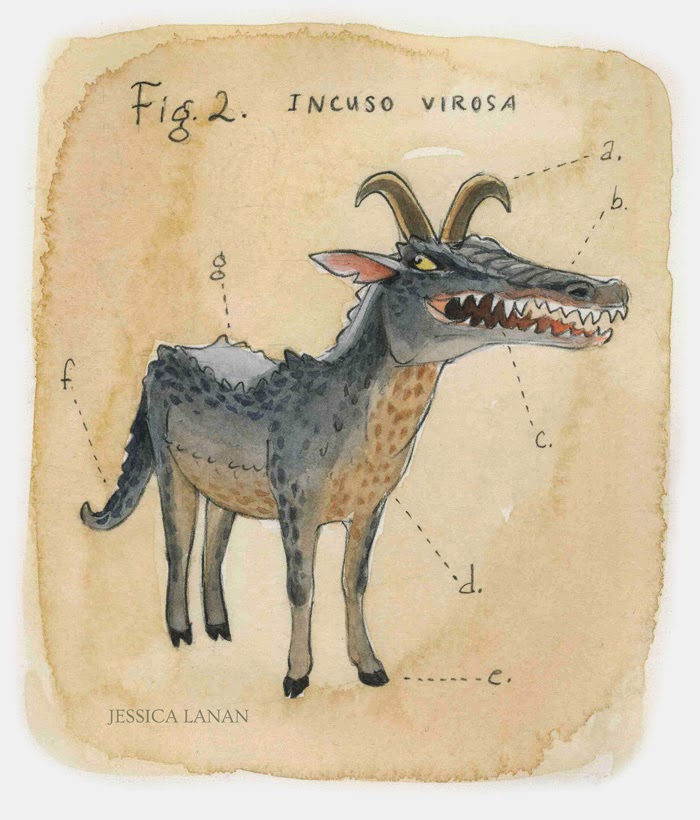
The Critic (Incuso Virosa)

Habitat: Your Mind
Diet: Negativity
Habits: Venomous. Often nocturnal, brings up worries at bedtime.

A wild Critic can lash out at your work (or life in general) with potent venom. “You aren’t talented enough,” the Critic will whisper in your ear. “Look at this other person’s work. It’s so much better.” The Critic will dredge up your mistakes and mockingly parade them before your eyes at your moment of greatest weakness.

As terrible as it sounds, A Critic can be helpful if it is trained to come out only when needed. The Critic is handy when deciding which thumbnail composition is better and why, or editing that manuscript in the second draft. But if it starts telling you that everything you make is garbage or that you’re not nearly as good as so-and-so, it’s time to go back in the kennel.

Tips for Coping with a Critic:
  •  Use a muzzle to keep it from biting
  • Feed it as little negativity as possible. 
  • Don’t let the Critic’s words become your own.
  • It’s okay to tell it to settle down. (Yes, out loud. Try it, I dare you!)
  • Critics shy away from laughter and fun. Remember fun?
  • Surround yourself with positive, encouraging people.

http://jessicalanan.com/

The Sloth (Choloepus Languidus)

Habitat: Your Mind
Diet: Inactivity
Habits: None

The sloth really wants you to succeed. It does. But it would rather not give up its Netflix marathons and surfing Facebook on its phone.

The Sloth is the creature that will tell you that your first thumbnail is good enough. Why bother trying other compositions? It will discourage you from taking those figure drawing classes you need, because that sounds like a lot of work after all. If you have a feeling that you need to work on your craft but you never seem to get around to doing it, you might be contending with one of these creatures.

Not to worry! Sloths can be trained. When properly employed, a Sloth can stop you from becoming a perfectionist, particularly on the projects that just aren’t worth the time. If you’re getting paid a pittance for an illustration, it probably isn't time to make the Mona Lisa. All it takes to train a Sloth is a little bit of priority shifting and the adoption of some new habits.

Tips for Training a Sloth:
  • Track your time and identify distractions.
  • If online distraction is a problem, you can use LeechBlock (Firefox) or StayFocused (Chrome) to limit the sites you can visit during specific times.
  • Put your phone out of reach and turn off notifications.
  • Force yourself to work on a project for just 20 minutes. Chances are good that the Sloth will slink away as you start to have fun with the project.
  • Work at a consistent time. Find a schedule that works for you.

In a Nutshell:


If you have a Critic, Ego or Sloth, don't beat yourself up over it. It's normal! Identify the species that is impeding your growth the most, and take a small step this week to help tackle it.

----

Jessica Lanan is a children's book writer and illustrator living in Boulder, Colorado. See more of her work at jessicalanan.com, on facebook or twitter.

Monday, December 23, 2013

For Those Who are Not Cinderella

If you’re an unpublished or aspiring author or illustrator, this post is written for you. If you have attended a few conferences or follow publishing blogs and the like, you may have come across at one point or another a story that goes about like this:

“Meet Jane Doe. Jane Doe was a totally unknown talent. Then one day, on a whim, she sent her manuscript/portfolio to [insert name of extremely famous and talented agent or editor.] Suddenly she became a whirlwind success! She was perfect! Her work was perfect! Everyone loved her! Her manuscript was immediately sold to the highest bidder and she subsequently won the Caldecott medal. And all that under the age of 30! Amazing!”

This story usually follows with something along these lines:

“Aspiring writers and illustrators will find her story very uplifting and inspirational."

Now, this is kind of the opposite of how I would expect that story to make people feel. If you ask me, I think aspiring writers and illustrators want to hear about how hard work and perseverance pays off, not about some insanely talented person's fairytale story. Usually the fairytale story makes you feel like you ought to just give up and go jump off a bridge.

However, people who want to devote their lives to making books for children (or at least the ones I know, with the conspicuous exception of myself) seem to be delightful human beings. If they feel envious they don’t show it. Before long they pick themselves up, look their friend in the eye and say, “I’m so happy for you! That’s really wonderful that you are an overnight sensation and have twelve book deals.” They smile and clap for their friends and go home and feel grateful that at least they can use their rejection letters to heat the house over the winter and save on utilities.


Feeling envious is normal. I’m convinced that most everyone does it, and if they claim that they don’t, it’s either because they’ve been very lucky and had a Cinderella-success-story of their own, or because they are lying. Those who can be extremely gracious and happy for the success of others are just more adept at letting go of the negative feelings. The important thing is is not to feel guilty for being jealous. Just accept that it’s a feeling that happens, and move on.

After all, these universal human feelings we struggle with are just the stuff of which great stories are made. Nobody wants to read about a perfect character who is gracious and charming and ideal in every way. It would be utterly bland. If you think about it, Cinderella is rather one-dimensional. What mistake did she ever make? How can a real person, full of faults, relate to her? Characters need imperfections, heroes need demons to conquer. Don’t hate yourself for your darker moments, just learn from them, and let them go so they don’t hold you back.

And just remember that if you ever end up on a stage giving a keynote address about your success, tell the audience what they need to hear: that you got to where you are by working hard, by not giving up, and by truly loving what you do.

They will love you for it.

----
Jessica Lanan is a children's book illustrator living in Boulder, Colorado. See more of her work at jessicalanan.com, on facebook or twitter.

Monday, May 9, 2011

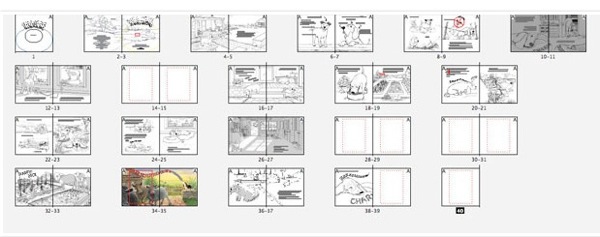
20 Steps To Writing A Children's Book - by Debbie Ohi


20steps
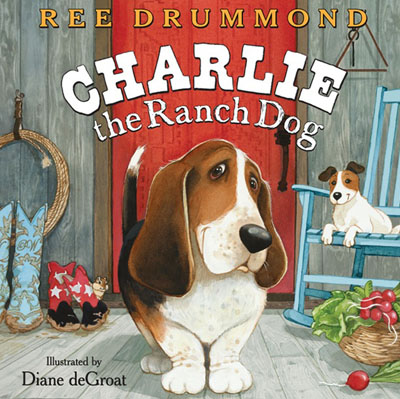
Posted by Ree Drummond, 20 Steps To Writing A Children's Book includes a ton of sketches and drawings by illustrator Diane deGroat that give a wonderful peek into how a children's picture book was created. Though the title's focus is on writing, I also found the sketches and layout images fascinating and enlightening.
CharlieRanchDog

- Debbie

Tuesday, May 3, 2011

Monday, November 1, 2010

Picture Book Idea Month starts today


This challenge is GREAT for any illustrator who is also starting to write picture books as well. The goal: to come up with one picture book story concept each day in November. I'm taking this challenge because I figure that by the end, I should have at least ONE concept that I like enough to turn into a full-blown picture book storyboard.
Who's with me? You can find out more information in Tara Lazar's blog.

Thursday, September 2, 2010

Going From Writing To Illustrating - by Debbie Ridpath Ohi


Unlike the others on this blog, I came to children's book illustration from the writing side. I have no formal art training (middle grade author Linda Sue Park tells me I should say that I'm "self-trained" instead, heh) and up to about a month ago, I considered myself mainly a writer.
I did a guest post about my experience on the SCBWI Illustrator Committee blog recently, for those interested. Summary: after my friend Beckett Gladney strong-armed me into entering the SCBWI Illustrator Portfolio Showcase at the summer conference, I won two awards and was subsequently approached by Simon & Schuster about illustrating Michael Ian Black's newest picture book, I'M BORED (coming out in 2012).
So while the others will be posting from much more illustration experience, I'll be posting from the viewpoint of a writer who is just learning the ins and outs of children's book illustration, and how it compares to the writing side. I'm not giving up writing, by the way, so feel free to visit Inkygirl: Daily Diversions For Writers for writing-related info and comics.
This blog is hosted on my Squarespace account, so please forgive the quirks that go along with that. So far I haven't found a way to make the main banner clickable to the Mentees home page instead of my own -- the only way to do that would be to pay for another Squarespace account, and I need to get more book contracts before I can afford to do that. :-)
Anyway, do checked out our bio pages at the top of the page as well as theMentees Illustration Gallery. And thank you for visiting!