Showing posts with label black and white art. Show all posts

Wednesday, December 24, 2014

Point of Focus -- by Eliza Wheeler

Many illustrators include black and white work in their portfolios, in addition to color work, in order to appeal to those publishers looking to hire artists for chapter and middle grade children’s books. I’ve worked in both black & white and color, and in both cases, creating a strong composition is all about hierarchy and focal point. 

The objective is to guide the viewer’s eye around a scene in an intentional way. With color work, an easy way to create a focal point is to use a limited color palette overall, then bring in a bright pop of a contrasting color to your main subject. Since this isn’t an option for black and white work, the main emphasis is more simply on lights and darks. Try including a range of tones, from pure black, to medium gray, to bright white. 
   
A focal point is created where the lightest and darkest areas of the piece are paired together. This painting, ‘The Dream’, by Rousseau, is a great example. The overall colors are muted tones of green, with the pale white figure placed against a dark rust-brown object. The entire painting is packed with detail, yet the eye is instantly drawn to the reclining figure.   
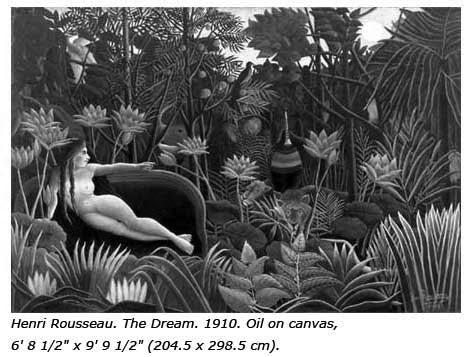
While this painting works beautifully in color, its focal point is still strong when converted to grayscale. I would encourage illustrators to bring color pieces into Photoshop and see how they work in black and white. If the illustration flattens out considerably in this process, the intended main subject may need a greater range of darks and lights in order to emerge as the visual point of focus.  

~~~~~~~~~~~~~~~~~~~~~~~~

Eliza Wheeler illustrates and writes for children's picturebooks and middle grade novels. Author/Illustrator of NYT Bestseller Miss Maple's Seeds
Illustrator of Wherever You Go by Pat Zietlow-Miller (coming May 2015)
Illustrator of The Grudge Keeper by Mara Rockliff
Illustrator of Newbery Honor book Doll Bones, by Holly Black

visit www.wheelerstudio.com
@WheelerStudio on Twitter and Instagram


Thursday, February 6, 2014

The Difficulty of Defining Goals


This month on the KidLit blog, we're talking about goals. I've been attempting to write my post for the past week and have deleted more first paragraphs than I would have thought possible. Allow me to explain.


Most folks in the field of children's illustration will tell you that their ultimate end goal is publishing a book. I do want to acknowledge that, yes, of course, I'd love to publish any of my books, but I have a lot of trouble thinking about publication as an actual goal. When you define your goal as publishing, you essentially place your hopes and hard work in the hands of sales departments, "the market", and an industry, which, though it strives daily to create excellent content for children, is still an industry, and by definition, concerned with the production of commercial goods.


I can only speak for myself, but, as an illustrator and writer, my goals are about my craft. I want to learn as much as I can about illustration and storytelling and spend each day experimenting with words, composition, character, color, and line. While I do hope to publish someday, I cannot control what someone else will think about my work. I can, however, strive to tell the best stories I possibly can. It's a subtle distinction, but to me, it seems a very important one. 


Fellow kidlit blogger, Jen Betton, and I were talking about this post, and she summed up what I was trying to say rather succinctly. "Publishing isn't your end goal, but rather storytelling is. Publishing is the secondaryimportant, but secondaryreward to telling an awesome story."


Long term objectives are great; I cannot wait until I can walk into a bookstore and find books by all of my talented illustrator colleagues and friends. However, it is really important to take pleasure in the work itself and in the process of getting there.


_ _ _ _ _
Lisa Anchin is a Brooklyn based children's illustrator doodling her way across the five boroughs. You can see more of her work at lisaanchin.com and find her on twitter @lisaanchin 

Tuesday, December 4, 2012

Inspiring Black and White Art - by Andrea Offermann


Gustave Doré: illustration for "London", 1876
I shared my experience with working on a papercut cover for „The Kairos Mechanism“ recently on my website, and talked about my process at the wonderful lost weekend at David Diaz’ house that Jen and  Debbie already posted about. I have been fascinated with black and white art for a long time, and in view of the Tomie dePaola competition deadline coming up and the fact that the illustration has to be black and white, I would like to share some black and white art that I have come across and been very inspired by:

Arthur Rackham: illustration for "Sleeping Beauty", 1920
Arthur Rackham: I have been a great admirer of his work for a long time, but only recently found out that he illustrated two fairytales, „Sleeping Beauty“ and „Cinderella“, in black and white silhouettes. His artwork is intricately layered, I especially loved this illustration from Sleeping beauty, where he manages to show different layers of depth only with black and white. The image is elegant, beautiful and holds loads of storytelling and action while managing to appear clear and simple at the same time, incredible!

A still from Lotte Reininger's "The Adventures of Prince Achmed", 1926

Lotte Reininger: She was a German papercut artist and animator in the first half of the 20th century and completed the first full length animated film, „The Adventures of Achmed“, in 1926. Inspired by traditional eastern shadow theater, she invented a technique to adapt silhouette for animated film. Her figures, backgrounds and compositions are beautiful, and it’s amazing how she can convey emotion and acting with her silhouette figures. Here is an excerpt from „The Adventures of Achmed“:


and her version of „Cinderella“:


Karel Zeman: he was a czech artist, animator and director who experimented with stop motion animation, artwork, mix of painted backgrounds and real backgrounds, stilization and very creative special effects. For many of his feature films he drew inspiration from artists who had illustrated the books he was turning into movies, such as Gustave Doré’s illustrations for „Baron Munchhausen“, or Zdenek Burian’s illustrations for „Journey to the Center of the Earh“, thus creating a unique artistic vision.

Gustave Doré: illustration for "Baron Munchhausen", 1866
Especially „Die Erfindung des Verderbens“ based on a Jules Verne book is unique, filmed in black and white and using stilized line work background and overlays, patterned costumes and stop motion animation to convey the surreal world of the film and create a unique artistic style. Here is the trailer:


I hope you will enjoy these examples!

-------------

Andrea Offermann recently illustrated  Kate Milford’s „The Broken Lands“, Cornelia Funke’s „Ghost Knight“ and Sonya Hartnett’s „The Midnight Zoo“. You can see her work at www.andreaoffermann.com .